A style crisis isn’t a breakdown. It’s a breakthrough.
It’s not that your clothes don’t fit.
It’s that you don’t fit them anymore.
I’ve worked with hundreds of women navigating midlife transitions—new jobs, empty nests, changing bodies, changing minds—and the most common thing I hear is this:
“I used to know what I liked. Now I have no idea.”
Style confusion at this stage of life isn’t a crisis—it’s a clue. A clue that something inside is evolving, and the outside hasn’t caught up yet.
YOU’RE NOT BEING “TOO SENSITIVE.” YOU’RE BEING HONEST
Maybe the blazer that once made you feel powerful now feels stiff and try-hard.
Maybe that cocktail dress that used to earn compliments now makes you feel like you’re wearing a costume.
Or maybe, in what feels like overnight, your entire wardrobe feels like it belongs to someone else—someone who was once you, but no longer is.
This doesn’t mean you’ve lost your style.
It means you’ve outgrown it.
THE STYLE YOU HAD WAS BUILT FOR A LIFE YOU’RE NO LONGER LIVING
Before the pandemic, you had a rhythm. Maybe you were commuting daily, suiting up for meetings, slipping into heels like it was second nature. Now? You lead virtual teams, juggle aging parents, or run your own business in a hybrid world that doesn’t seem to have a dress code—yet still manages to make you feel underdressed or overdressed, depending on the hour.
Or maybe you once centered your wardrobe around parenting—quick changes, low-maintenance, machine-wash-everything. Now the kids are older (or out of the house), and you’re left wondering: What do I want to wear when I’m not dressing for survival?
Or perhaps you’ve been promoted. People look to you differently now, and you want your style to reflect your authority—but also your authenticity. (And no, that doesn’t have to mean buying a pantsuit in every neutral.)
Whatever the shift, your wardrobe feels like a closet full of expired versions of you.
BUT HERE’S THE CATCH: YOU DON’T KNOW WHAT THE NEW YOU WANTS YET
This is the hardest part. You know what doesn’t feel right. But you can’t quite articulate what does.
So you stand in your closet, arms folded, thinking:
- “I don’t want to look trendy.”
- “I don’t want to look frumpy.”
- “I don’t want to look like I’m trying too hard.”
- “I don’t want to look invisible.”
Okay. So what do you want to look like?
::crickets::
That silence? That’s the space between chapters. And it’s incredibly fertile ground.
A STYLE CRISIS IS JUST A STYLE REBOOT IN DISGUISE
This isn’t about throwing everything out and starting over. It’s about realigning. Listening inward. Dressing in a way that reflects the woman you are now—and the one you’re still becoming.
And that’s the part most people skip over. They go straight to shopping. Or worse—straight to Instagram.
But your next style chapter shouldn’t be copied and pasted from someone else’s grid. It should be rooted in you.
NOT SURE WHERE TO BEGIN? START HERE
PAY ATTENTION TO WHAT YOU REACH FOR (AND AVOID). THERE ARE CLUES IN YOUR LAUNDRY BASKET
If you want an honest snapshot of your current style, skip the aspirational Pinterest board and look in your laundry basket. What’s in there is what you actually wear. What you feel good in. What fits your life. These are your accidental uniform pieces—the things that get worn on repeat, even if they weren’t particularly expensive or exciting when you bought them.
And on the flip side, what’s gathering dust in your closet? That silky blouse you keep bypassing? The tailored trousers you meant to wear to client meetings but somehow never do? Those aren’t just forgotten—they’re data points.
Understanding what you avoid can be just as illuminating as knowing what you love. Often, we’re quicker to articulate what we don’t want than what we do. That’s not a flaw—it’s a filter.
“Not that” becomes “maybe this.”
If you know you’re no longer reaching for tight sleeves, fussy fabrics, or anything that requires shapewear and a pep talk, congratulations—you’ve just eliminated a whole category of style that doesn’t serve you. That kind of clarity is gold.
So take note: What’s on heavy rotation? What’s getting skipped? Your style is trying to tell you something. You just need to listen in the right language—laundry.
TAKE INVENTORY OF YOUR LIFESTYLE. YOUR CLOSET SHOULD MATCH YOUR CALENDAR— NOT YOUR PAST
Before you buy anything new—or throw your hands up and claim you have “nothing to wear”—start here: look at how you’re actually living now. Not how you used to dress when you were in the office five days a week, not what you wore pre-kids, and not what’s pinned to a fantasy vacation board.
Your wardrobe should serve your real life.
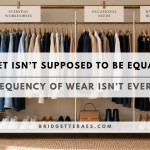
I often use a tool like this to help clients map out their clothing needs. Imagine two circles:

- One circle holds your in-office exclusives—structured blazers, tailored dresses, heels you only wear when you’re not walking more than 10 steps.
- The other holds your work-from-home exclusives—the cozy joggers, the no-bra-required tops, the things that never leave the house.
- The overlapping area? That’s the gold. These are the pieces that pull double duty—professional enough for a Zoom call or office visit, comfortable enough for your actual life.
The amount of overlap can—and should—shift based on how often you’re remote vs. in-person. If you’re mostly virtual but go in once a week, you don’t need a full office wardrobe anymore. But you do need a few versatile pieces that make that transition feel seamless.
The key here is clarity. If your lifestyle has changed but your closet hasn’t caught up, it’s no wonder everything feels off.
Start by mapping out:
- How many days a week you go into the office (if at all)
- How often you have client-facing events, video meetings, or networking functions
- What you do on weekends—and whether your clothes reflect that
- What your ideal balance of comfort and polish looks like
When your wardrobe is built around the life you actually lead—not the one you used to live or think you “should” be living—you’re no longer dressing from a place of guilt or guesswork. You’re dressing with intention.
CREATE A PRIVATE PINTEREST BOARD OR FOLDER. DON’T OVERTHINK— JUST SELECT WHAT YOU LIKE
When you’re not sure what your style is, the best place to start isn’t your closet—it’s your instincts.
One of the first exercises I give new clients is this: collect a few images that capture the aesthetic or mood you’re drawn to. That’s it. No need to justify or analyze. Just save what you love, and don’t worry about whether it’s “practical” or “age-appropriate” or even remotely similar to what’s already in your closet.
The point isn’t to replicate someone else’s look. The point is to uncover the common threads—the colors, silhouettes, textures, or vibes—that feel like you.
Here’s how to do it:
- Create a Pinterest board (or a folder on your phone, or a saved Instagram collection) and name it something non-committal like “Style Vibes” or “Future Me.”
- Save first, analyze later. Your only job is to respond to what catches your eye. If you see a photo and something in you goes yes, save it. Don’t filter. Don’t judge.
- Let your subconscious take the lead. The more instinctive you are, the more accurate the results. This exercise works better when you don’t try to be “smart” about it.
- After you’ve collected a handful of images, step back and look for patterns. Are there consistent colors? Recurring silhouettes? A certain mood or texture that keeps showing up?
You might notice you’re drawn to structure, or flow, or softness. You might see that almost everything you saved involves clean lines… or oversized knits… or polished neutrals with a pop of red lipstick. Whatever the patterns are, they matter—because they reflect how you want to feel, even if you can’t yet describe it.
Most importantly: this isn’t about copying. It’s about translating. What you pin might not work exactly as-is for your life—but it points to something deeper you can adapt. Inspiration is just information, and it becomes powerful when you apply it to your context, your lifestyle, and your needs.
TRY WARDROBE JOURNALING. YOUR OUTFITS ARE TELLING YOU SOMETHING— TRACK WHAT THEY SAY
If your closet feels like a confusing tangle of “meh,” it might be time to treat it like a research project. But don’t worry—this isn’t about spreadsheets or mood boards. It’s about simply noticing what you wear and how it makes you feel.
Here’s how it works:
- Each day, snap a quick photo of what you’re wearing. You don’t need to share it with anyone—it can live in a private album on your phone.
- Rate how you felt in it. Were you comfortable? Confident? Pulled-together? Irritated by a scratchy seam all day? The goal is to start recognizing the difference between clothes that work and clothes that are just… there.
- Make short notes if something stands out. Maybe you loved how a structured blazer helped you take charge in a meeting—or maybe you realized that high-rise jeans are great until lunchtime.
After a week or two, scroll back through the photos. Patterns will emerge, often more clearly than you expect. You’ll start to see what silhouettes make you feel your best, which colors light you up, and which pieces you’re reaching for out of habit—not love.
Wardrobe journaling helps bridge the gap between your ideal style and your real-life style. It gives you feedback you can actually use, especially when you’re too close to your closet to see what’s working (and what’s not).
Think of it as your own personal focus group, starring you.
FIND YOUR BUZZ WORDS: STYLE STARTS WITH A FEELING
Before you can dress the part, you have to know what the part feels like.
When clients are stuck trying to describe their style, I ask them to start simpler:
“How do you want to feel in your clothes?”
Not what trends you like.
Not what others expect.
Just… how do you want to feel when you get dressed?
That’s where buzz words come in.
Buzz words are three adjectives that describe how you want your clothes to make you feel. They become your internal compass when you’re evaluating an outfit, shopping for something new, or editing your closet.
For example, your buzz words might be:
- Polished, comfortable, confident
- Modern, effortless, powerful
- Relaxed, artistic, elegant
There are no wrong answers—but there are revealing ones.
Once you identify your words, try this:
Every time you put on an outfit, ask: Does this make me feel [insert buzz words here]? If the answer is no, that’s valuable data. You’re not dressing for the style you want—you’re dressing for a default you may have outgrown.
And when you’re shopping? Use those words as your North Star. You might like a piece on the rack, but if it doesn’t align with how you want to feel, it probably won’t get much wear.
Because as I always say: you gotta feel it to be it.
STOP EXPECTING YOUR OLD CLOTHES TO CARRY NEW MEANING. LET THEM GO WITH GRATITUDE, NOT GUILT
If your closet feels heavy, it’s probably not just the number of hangers. It’s the emotional weight of clothes that once served you… but don’t anymore.
We all have them—those “used-to-be” pieces. The dress you wore to land your dream job ten years ago. The blouse that was perfect before your body shifted. The heels that made you feel powerful before you decided comfort wasn’t optional.
There’s nothing wrong with these clothes. But they may no longer belong in your life.
And here’s the thing: clothes don’t become valuable because you keep them. They become valuable because they did their job.
- They made you feel confident when you needed it.
- They got you through a phase of your life.
- They helped you define who you were at the time.
That’s enough. Their purpose has been fulfilled.
Letting go doesn’t mean erasing your past. It means creating space for your future. And doing it without guilt means recognizing that your style, like your life, is allowed to evolve.
If you find yourself holding onto things just in case your body changes back… or your life gets simpler again… or your style magically snaps into place—you’re dressing for a hypothetical. And you deserve more than that.
Let your closet reflect who you are, not who you were—or who you’re waiting to become.
Say thank you. Then say goodbye.
YOUR DON’T HAVE TO FIGURE THIS OUT ALONE
Sometimes you need a mirror.
Sometimes you need a map.
And sometimes you need someone to gently, kindly, and objectively guide you back to yourself.
That’s what I do.
If your wardrobe feels like it belongs to a past life—but you’re ready to dress for this one—I’d love to help.
Book a complimentary Image & Style Assessment with me. You don’t need to have it all figured out first. That’s exactly what we’ll do together.